
|
 |
 |
 |
 |
 |
 |
|
|
|
|
|
|
|
|
| tax abatements: overview |
   |
What problems can tax abatement solve? Jurisdictions can design policies to address a variety of community concerns, depending on local conditions and priorities. To encourage rehabilitation and prevent the loss of existing rental homes, for example, cities may offer to limit real estate tax increases for property owners who upgrade or remodel aging structures. Local jurisdictions also may offer tax exemptions as a community development strategy to help stimulate new construction in targeted areas that have experienced disinvestment and decline. Some communities may benefit from offering tax abatements or exemptions to target the rehabilitation or redevelopment of foreclosed homes and/or vacant properties. By stipulating the inclusion of affordable units as a condition for eligibility, tax abatement policies can further help to increase the supply of homes available to low- and moderate-income households. For example, circuit breakers help to reduce the property tax burden for income- or age-eligible households. Finally, tax abatements can be used to prevent displacement and promote participation in subsidized housing programs (by rental property owners) in areas that saw rising property tax assessments due to the housing price appreciation that accompanied the last housing boom. Where are tax abatement policies most applicable?
Thanks to the broad range of goals that tax abatements and exemptions can help achieve, they can be successfully applied in both strong and weak markets. Tax abatements can help preserve affordability for residents in areas where housing values escalated significantly during the last housing boom, but can also be used to stimulate new construction and substantial rehabilitation in neighborhoods in need of revitalization. |
Solutions in Action |
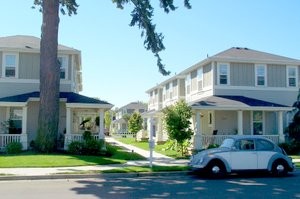 Cooper Street Townhomes, Portland OR -- Photo courtesy of City of Portland, Oregon Portland, Oregon has a range of tax abatement programs designed to promote development near public transit stations, rehabilitation of rental homes, the construction or rehabilitation of owner-occupied homes in certain "opportunity areas," and nonprofit ownership of affordable rental homes. As of fiscal year 2006-2007, approximately 13,405 homes received one of these abatements, contributing significantly to the city's objectives for affordable homes and community development. Click here to learn more about Portland's tax abatement programs. |
 Learn more about tax abatements Learn more about tax abatements Go back to learn about other policies that can be used to capitalize on market activity Go back to learn about other policies that can be used to capitalize on market activity |
 Copyright © 2015 Center for Housing Policy. All Rights Reserved
|

