
|
 |
 |
 |
 |
 |
 |
|
|
|
|
|
|
|
|
| abandoned properties: overview |
   |
| What is facilitating the reuse of abandoned, vacant, and tax-delinquent properties? This set of policies helps communities to meet their affordable housing and community development needs by bringing disinvested properties back into productive use. The properties that are the subject of these policies generally fall into one or more of the following categories:
What about properties with mortgage foreclosures? The recent economic downturn began with a housing crisis sparked by lending and later spread to prime mortgages as unemployment rose. The result was a historic increase in the number of mortgage foreclosures, some in neighborhoods that had not previously had any issues with vacant or abandoned properties. This section will address the reuse of abandoned, vacant, and tax delinquent properties in areas that have traditionally seen significant disinvestment, even to the point of blight. If you are seeking information on mortgage foreclosures and neighborhood stabilization, please visit our companion website (www.foreclosure-response.org) which was created to assist communities affected by the most recent mortgage foreclosure crisis. In both types of communities (those suffering long-term disinvestment and those only recently affected by the current mortgage foreclosure crisis) implementing policies to re-use the properties as part of a neighborhood redevelopment strategy can stimulate a cycle of re-investment, fostering communities that are safe, welcoming, and thriving. By allocating at least some redeveloped sites for affordable housing, communities can ensure that working families will be able to stay in the area even if property values and home prices rise as the neighborhood improves. What types of tools help communities to facilitate the reuse of disinvested properties? The tools for reusing disinvested properties generally involve breaking through administrative challenges that can otherwise hinder redevelopment. These challenges may include lengthy and | Solutions in Action |
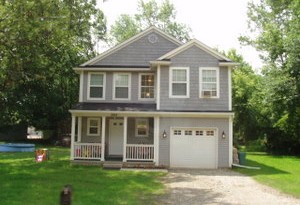 Photo courtesy of PMI Mortgage Insurance Co. An inter-local agreement in 2002 between Genesee County and the city of Flint, Michigan created the Genesee County Land Bank, which was recognized with a 2007 Innovations in American Government Award. According to the land bank, it has acquired thousands of properties in its five years of operations and has primarily obtained these using Michigan's expedited tax foreclosure process. (Information on Michigan's tax foreclosure process is available here.) Properties can also be given to the land bank by non-profits or government agencies or can be purchased to help assemble a developable parcel. In disposing of properties, the land bank has a great deal of flexibility in holding, demolishing, or transferring properties as needed to meet strategic goals. One goal of the land bank is the redevelopment of abandoned properties into affordable homes. To meet this goal, the land bank can sell properties to non-profit developers for less than fair market value but not less than the costs to the land bank. In 2004, the state of Michigan facilitated the creation of more land banks by passing the Land Bank Fast Track Act. The act allows local governments to create independent land banks and authorizes land banks to acquire and dispose of properties. After the passage of the act, at least seven additional Michigan counties established land banks. Click here to leave this site and learn more about the Genesee County Land Bank. | |
| Looking for examples that focus on abandonment due to mortgage foreclosure? Information on how communities are stabilizing neighborhoods affected by foreclosures can be found on HousingPolicy.org's companion site, Foreclosure-Response.org. |
 Learn more about facilitating the reuse of abandoned, vacant, and tax-delinquent properties Learn more about facilitating the reuse of abandoned, vacant, and tax-delinquent properties Go back to learn about other policies that expand development opportunities Go back to learn about other policies that expand development opportunities |
 Copyright © 2015 Center for Housing Policy. All Rights Reserved
|

